Book II
Cover in development
Asian Beauty Foods
Traditional Foods and Herbal Practices for Healthy, Glowing Skin
The Art of Radiance Series
Book II · The Art of Radiance SeriesComing soon
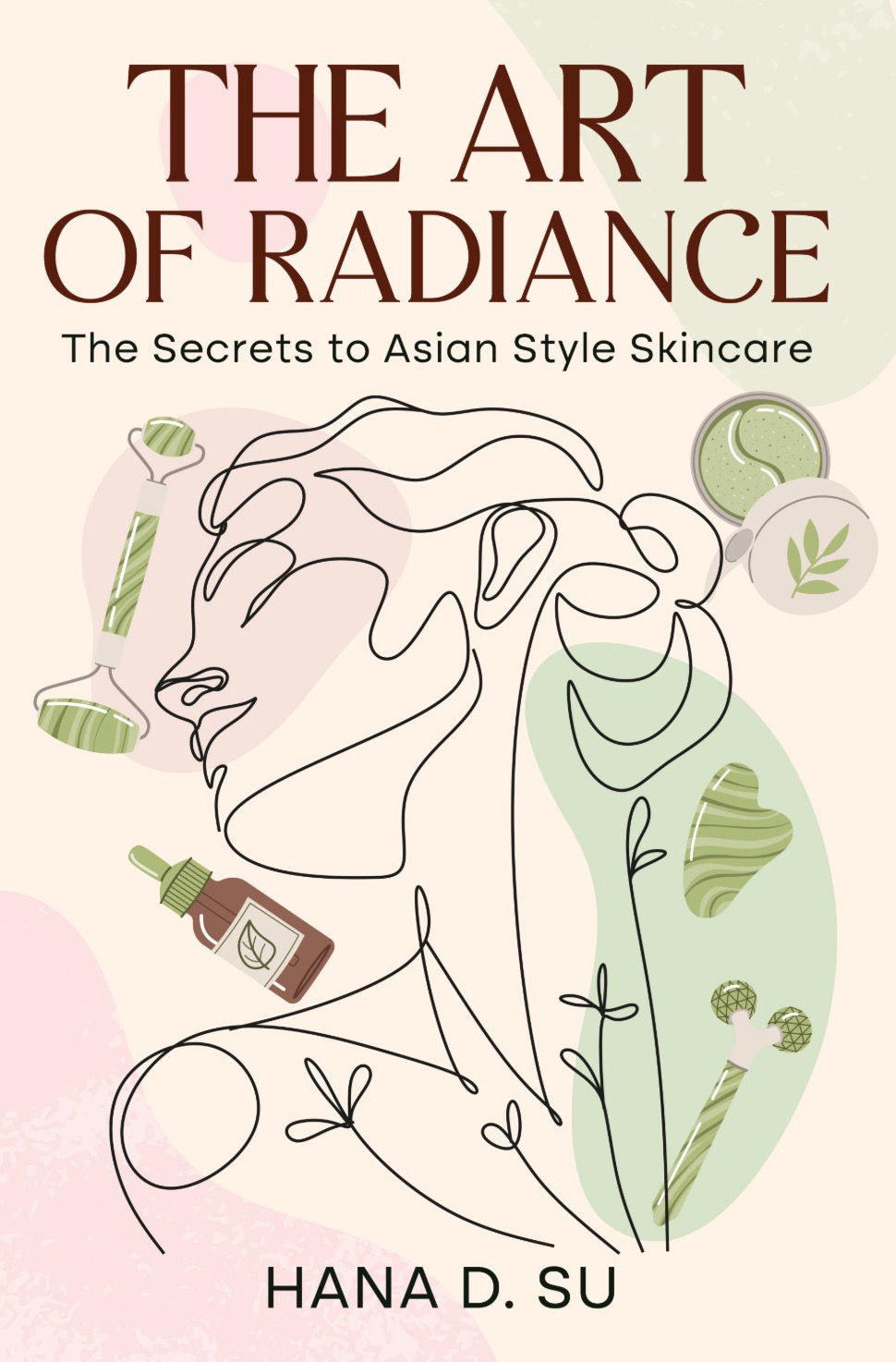
Asian Beauty FoodsTraditional Foods and Herbal Practices for Healthy, Glowing Skin
Eat your skincare — the nutritional wisdom of China, Korea, and Japan, made practical for a modern kitchen
By Hana D. Su · Paperback · Kindle
About the book
We eat our skincare.
Skin is a mirror of internal health. Asian Beauty Foods bridges the nutritional wisdom of Traditional Chinese Medicine, Korean hanbang, and Japanese food philosophy with modern skin science — from the gut-skin axis and dietary collagen to fermentation, anti-inflammatory eating, and the world of medicinal teas.
The book is built on three interconnected pillars: food as medicine (collagen-rich broths, brightening grains, anti-inflammatory vegetables), fermentation (cultivating a healthy gut-skin axis through kimchi, miso, and natto), and tea and herbal medicine (medicinal teas and adaptogens that support stress, hormones, and long-term vitality).
This is not a diet book. It is a return to a way of eating that honors the body's rhythms — seasonal, balanced, and unhurried — with thirty recipes, a thirty-day meal plan, a pantry guide, and an ingredient index organized by skin concern. Start with a cup of tea. Simmer a broth on a Sunday. Radiance is built meal by meal.
What you’ll learn
- 01How the gut-skin axis works — and why fermentation sits at the center of Korean, Japanese, and Chinese beauty traditions.
- 02The Five Elements and 'internal heat': a different way of reading your skin than oily, dry, or combination.
- 03Where dietary collagen actually comes from, and how to build broths that deliver it.
- 04The brightening kitchen: Job's tears, rice water, yuja, tremella, and the difference between glow and whitening.
- 05Anti-inflammatory eating, Asian style — ichiju sansai, mung bean, ginger, turmeric.
- 06Green tea, medicinal teas, and adaptogens: what tradition observed and what research suggests.
- 07How to eat with the seasons and rebuild your plate — with 30 recipes and a 30-day meal plan.
Who it’s for
- Readers who have tried every serum and suspect the answer may be on their plate.
- Anyone curious about how Traditional Chinese Medicine, hanbang, and Japanese food philosophy approach the skin.
- Home cooks who want a practical, modern way into broths, ferments, and medicinal teas.
- Readers of Book I who want to go deeper into the 'inner wellness' chapter.
Inside the book
Table of contents
How the book is structured, chapter by chapter.
Chapter 1
Beauty Begins in the Gut
Why the skin reflects digestion, and why a compromised gut cannot be out-moisturized.
Gut-skin axis · Inner health
Chapter 2
The Five Elements and Your Skin
Wood, Fire, Earth, Metal, Water — the Traditional Chinese Medicine lens that replaces 'skin types' with patterns of balance.
Five Elements · TCM · Goji berry
Chapter 3
Reading Your Skin Like a Map
How hanbang and TCM read the face as a living mirror of internal health — heat, dampness, dryness, and deficiency.
Face mapping · Self-observation · Internal heat
Chapter 4
Collagen from the Source
Seolleongtang, chicken broth, and the Asian approach to collagen as deep nourishment rather than a surface promise.
Collagen · Bone broth · Seolleongtang
Chapter 5
Fermented and Alive
Kimchi, miso, doenjang, and natto — probiotics, postbiotics, and the microbiome that connects gut and skin.
Fermentation · Kimchi · Miso · Doenjang
Chapter 6
The Brightening Kitchen
Glow (gwang) and translucency (toumeikan): Job's tears, lotus root, rice water, yuja, tremella, and white lily bulb.
Brightening · Job's tears · Rice water · Yuja
Chapter 7
Anti-Inflammatory Eating, Asian Style
Ichiju sansai — one soup, three sides — and the foods that keep 'internal heat' out of the body: mung bean, ginger, turmeric.
Anti-inflammatory · Ichiju sansai · Mung bean · Ginger
Chapter 8
Herbal Broths and Beauty Soups
Soup as the main event: boyak broths, black sesame, and the therapeutic delivery system of East Asian cooking.
Herbal broth · Black sesame · Beauty soups
Chapter 9
Green Tea: The Master Elixir
Matcha, sencha, and Longjing — EGCG, ritual, and what the research supports.
Green tea · Matcha · EGCG · Antioxidants
Chapter 10
Medicinal Teas and the Five Flavors
Omija, chrysanthemum, barley, burdock, jujube, and Solomon's seal — the five flavors and the organ systems they address.
Five flavors · Omija · Chrysanthemum · Jujube
Chapter 11
Adaptogens and Longevity Herbs
Ginseng, astragalus, he shou wu, reishi — the 'superior herbs' taken over a lifetime for vitality and youthful skin.
Adaptogens · Ginseng · Astragalus · Reishi
Chapter 12
Eating for Your Skin Season
Cooling summer foods, warming winter stews — seasonal eating as the skin's first line of adaptation.
Seasonal eating · Adaptation · Dandelion · White pear
Chapter 13
The Asian Beauty Plate
Rebuilding everyday meals around beauty nutrition — rice, broth, and small plates, without recipes or measuring.
Meal structure · Daily practice · Hara hachi bu
Chapter 14
30 Recipes for Radiant Skin
A practical manual for the beauty kitchen: broths, congees, ferments, teas, and complete meals.
Recipes · Congee · Broth · Tea
Chapter 15
A New Definition of Beauty
Beauty as vitality, ritual, and time — a quiet radiance built over decades rather than bought.
Philosophy · Ritual · Longevity
Back matter
- Glossary of Key Terms
- The Asian Beauty Pantry Guide
- 30-Day Meal Plan — four weeks: gut reset, collagen building, brightening, deep hydration
- Ingredient Index by Skin Concern
- Further Reading and Resources
Featured concepts
Ideas that shape the book.
You cannot out-moisturize a compromised gut
Digestion, inflammation, and the microbiome shape the skin from within. Topical care matters — but it works on a surface fed by everything beneath it.
Internal heat, dampness, and deficiency
Traditional Asian medicine reads redness, congestion, and dullness as patterns of imbalance rather than fixed skin types — and answers them with food.
Fermentation as beauty ritual
Kimchi, miso, doenjang, natto: living foods that cultivate the gut-skin axis and have anchored Asian tables for centuries.
Glow, not whitening
Gwang and toumeikan describe translucency and vitality — the result of circulation, hydration, and calm — not an altered skin tone.
Ingredient highlights
Ingredients explored in the book
Tradition and modern research, side by side.
Antioxidant· Skin & kitchen
01Green Tea
Camellia sinensis
Rich in polyphenols, especially EGCG, green tea is studied for antioxidant and soothing effects both consumed and applied.
ReadBotanical· Skin & kitchen
02Ginseng
Panax ginseng
A root used for centuries in East Asian tradition, now studied for antioxidant and skin-conditioning properties.
ReadBotanical· Skin & kitchen
03Rice
Oryza sativa
Rice water and rice bran have been used in East Asian beauty rituals for centuries, valued for softening and brightening.
ReadTonic herb· Kitchen
04Goji Berry
Lycium barbarum (gǒuqǐzǐ)
A bright red berry used in Chinese medicine to nourish the liver and kidneys, now studied for its antioxidant polysaccharides and carotenoids.
ReadTonic herb· Kitchen
05Jujube
Ziziphus jujuba (red date, daechu)
The red date of Chinese and Korean tradition — brewed as a calming, blood-nourishing tea and simmered into broths and porridges.
ReadFood· Kitchen
06Tremella
Tremella fuciformis (snow fungus, yín'ěr)
Snow fungus — prized in Chinese cuisine for deep hydration and often described as a natural counterpart to hyaluronic acid.
ReadFood· Kitchen
07Job's Tears
Coix lacryma-jobi (yulmu, yìyǐrén)
A gluten-free grain used in Asian medicine to 'clear heat and drain dampness' — the traditional brightening grain of Korea and China.
ReadHerbal tea· Kitchen
08Omija
Schisandra chinensis (five-flavor berry)
The five-flavor berry — sour, sweet, bitter, pungent, and salty in one bite — brewed as a cooling, hydrating tea in Korea and China.
ReadHerbal tea· Kitchen
09Chrysanthemum
Chrysanthemum morifolium (júhuā, gukhwa)
A cooling floral tea used across China and Korea to 'clear heat' — traditionally chosen for redness, tired eyes, and flushed skin.
ReadFood· Kitchen
10Black Sesame
Sesamum indicum (black variety)
A small seed with a large reputation in Chinese medicine — for hair, skin, and healthy aging — and a rich source of lignans, minerals, and healthy fats.
ReadFerment· Kitchen
11Miso
Fermented soybean paste (koji, Aspergillus oryzae)
Japan's foundational ferment — soybeans, salt, and koji — a daily source of live cultures, umami, and the gut-skin axis in a bowl.
ReadFerment· Kitchen
12Kimchi
Lacto-fermented vegetables (Lactobacillus spp.)
Korea's living side dish — salted, seasoned, and fermented vegetables rich in lactobacillus — and the most studied fermented food in gut-skin research.
ReadFood· Kitchen
13Bone Broth
Seolleongtang, tori paitan, and long-simmered stocks
Long-simmered broths such as Korean seolleongtang — the traditional 'collagen from the source' — rich in gelatin, glycine, and minerals.
ReadRelated journal articles
Nutrition2 min read
Understanding the Gut-Skin Connection
The gut and the skin are in constant conversation through the immune system, the nervous system, and the microbiome. What the research does — and does not yet — show.
Nutrition3 min read
Fermented Foods and the Gut-Skin Axis
Kimchi, miso, natto, doenjang. Long before anyone said 'microbiome', Asian tables were built around living foods. Here is what fermentation does — and what it can reasonably be expected to do for skin.
Rituals2 min read
Ichiju Sansai: One Soup, Three Sides
The traditional Japanese meal structure is not a recipe but a shape. It happens to be one of the simplest anti-inflammatory frameworks ever devised.
Wellness2 min read
Why Sleep Matters for Your Skin
The skin has its own circadian rhythm. Repair, barrier recovery, and cell turnover follow a schedule — and sleep sets it.
About Art of Radiance
One book in a larger inquiry.
Art of Radiance is a publishing and education brand exploring how biology, skincare, nutrition, lifestyle, environment, and everyday habits influence how we look, feel, and age. This is Book II in the series.
The Radiance Letter
A better way to think
about beauty & health.
A thoughtful letter exploring skin, nutrition, wellness, ingredients, longevity, and the science behind everyday rituals.
Thoughtful ideas. Useful science. No noise.